By Nathan Martin
July 15, 2013
As digital learning continues to spread and grow, Flipped Learning.org offers useful resources for teachers and schools seeking to “flip the classroom.”
Flipping the classroom is a form of “Blended Learning” and occurs when the main instruction moves from the group to the individual. Students might watch lectures at home, then come to school and work on problems with the teacher. Properly done, Flipped Learning offers increased individualized instruction and the chance for students to learn the material at their own pacing. For a history of Flipped Learning, see this retelling by Jonathan Bergmann and Aaron Sams.
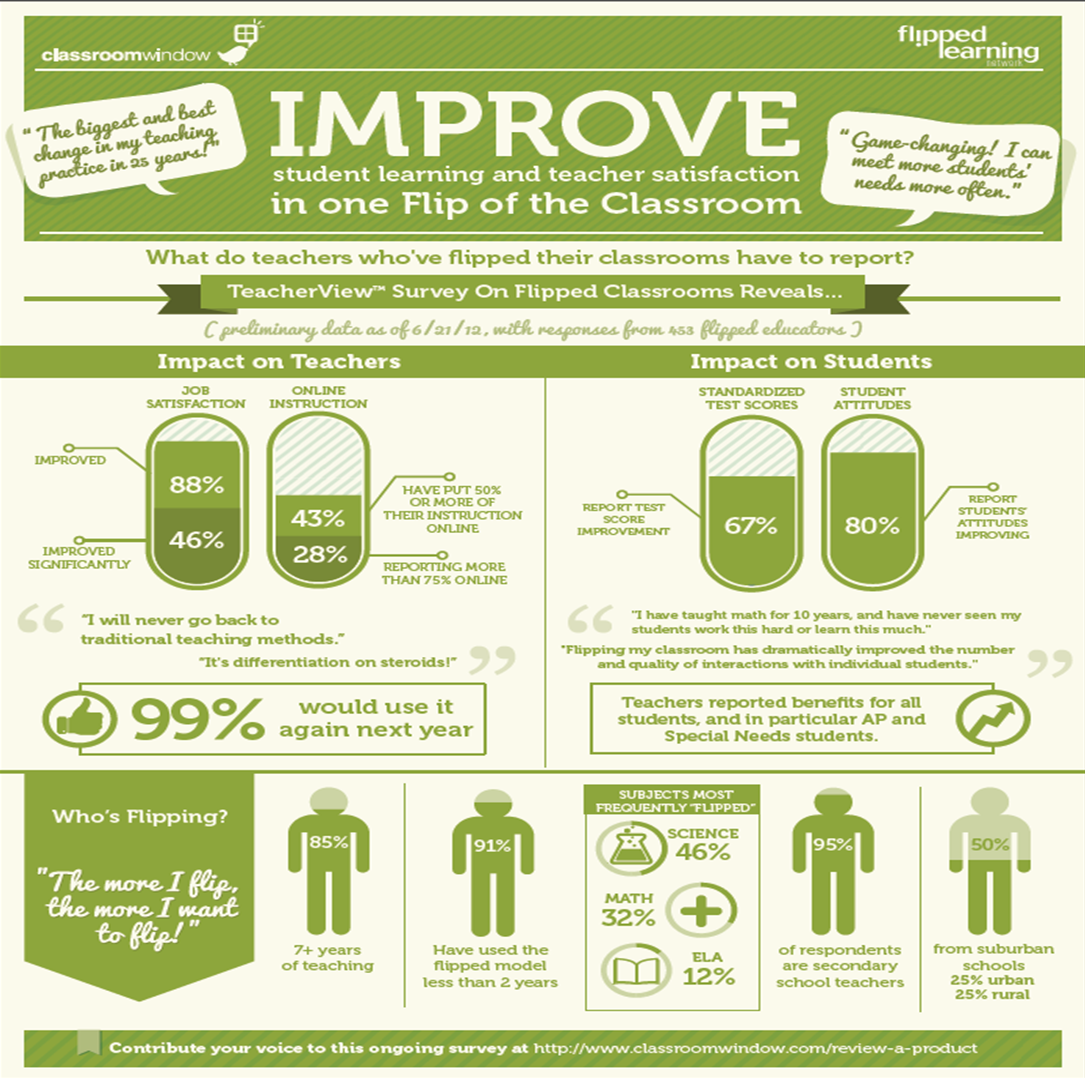
The results of this empowering of students and teachers can be seen in the infographic below from Flipped Learning, surveying teachers who have made the conversion.
Key quote comes from a teacher who notes, “I have taught math for 10 years, and have never seen my students work this hard or learn this much.”
For districts and schools exploring whether the flipped classroom or other forms of blended learning are the right fit, there are two resources worth highlighting.
In February, we put out our Blended Learning Implementation Guide along with Getting Smart and Learning Accelerator. It’s worth a careful read now, and should serve as a discussion point for faculty members and leaders. We noted, “Blended Learning means rethinking how class is structured, how time is used, and how limited resources are allocated.”
One criticism raised by the Economist article, Catching on at Last (our take can be found here) on the spread of educational technology is that teachers unions fear the spread of educational technology is replacing teachers with technology. While the Economist piece recognizes that education technology can improve the life of a teacher, we would supplement that acknowledgement with our publication from May, Improving Conditions and Careers: How Blended Learning Can Improve the Teaching Profession.
As education technology moves out of the laboratory and into the classroom, it is critical to keep focused on the goal of advancing digital learning. Preparing students to succeed in college and careers will require the use of highly effective technology and the direction of highly effective teachers. Policy, technology providers and political forces would do well to keep that in mind.
In the end, The Economist sums it up perfectly.
“Used properly, edtech offers both the struggling and the brilliant a route to higher achievement. The point is to maximize the potential of every child.”
Nathan Martin serves as the State Policy Director for Digital Learning Now!.